What It Means to Be Human, Wired to Work, SOAC · Podcasts · Full episodes, reels and show notes
Three podcasts, three pipelines
Three shows, three different routes: one runs end to end with a human polish at the finish, two keep a hand-cut edit and automate the cold open and every delivery.
The problem
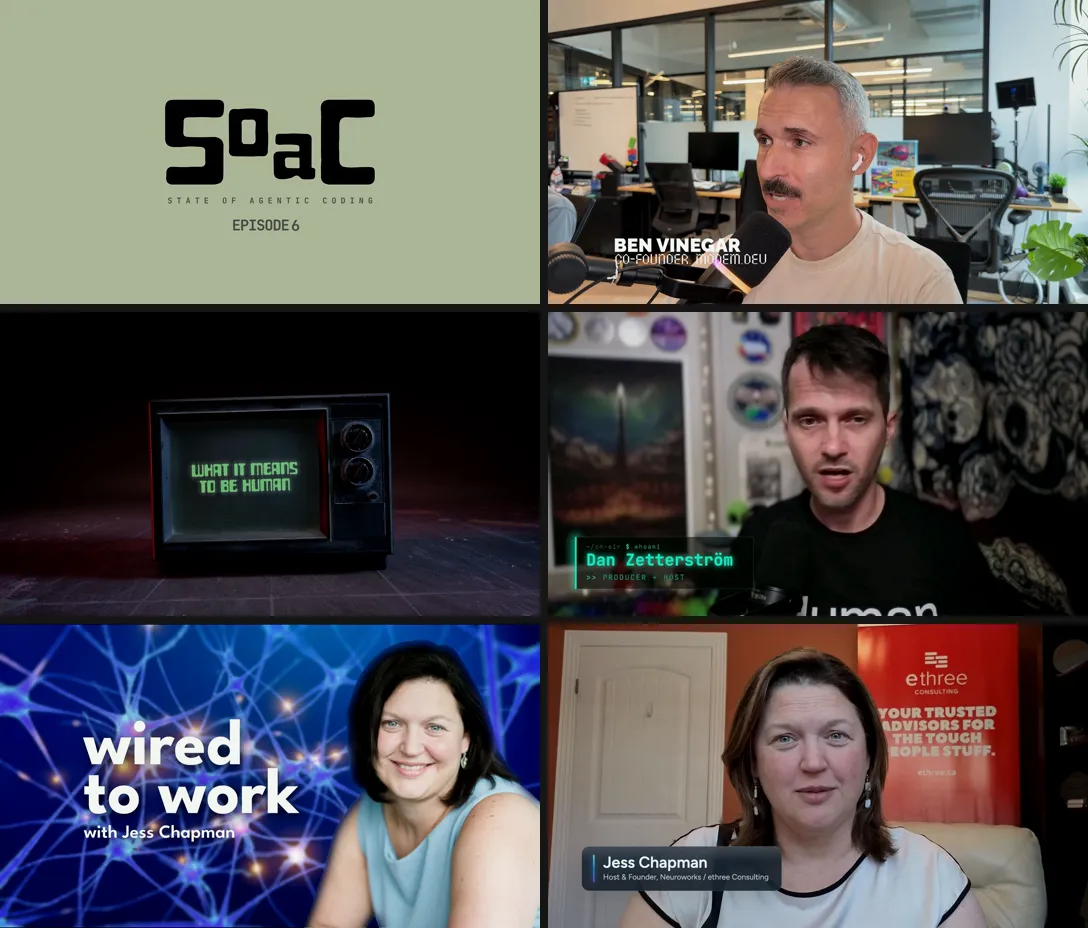
Three podcasts, three formats, one editor. SOAC, State of Agentic Coding, is a remote two-hander where Ben Vinegar and Armin Ronacher talk for close to two hours about how software gets built now. What It Means to Be Human is a studio interview series, one host across a table from one guest, with archive footage and documents cut in. Wired to Work is Jess Chapman’s show on how people work, built from remote conversations with guests and re-cut into takeaway episodes. Each has its own brand package, its own pacing and its own set of deliverables: the full episode, an audio-only cut, a vertical cold open, guest reels, and show notes with chapters.
The temptation is to put all three on one route. That would be wrong. A two-hander with a fixed format can be cut by rules. An interview series that lives on archive and documents cannot, and should not be. So each show got the pipeline it needed and no more.
The pipelines
SOAC runs end to end. A recording lands and the pipeline transcribes it, word by word with timings, and cuts it to the show’s house rules: fillers and false starts go, tangents that go somewhere stay, housekeeping between segments collapses to a single beat, pauses tighten to natural gaps rather than to silence. It switches cameras to whoever is speaking. It finds the cold open, a self-contained moment under thirty seconds that teases the episode without spoiling it. The brand package goes on, animations included: the animated title card, lower thirds that build on, the intro and outro, the vertical end slate on reels, captions on anything nine by sixteen. Every animation is rendered from the show’s package, so no motion work is done by hand. From the same transcript it writes the chapters, the show notes, the quotable lines and a list of names and products to verify. A speech-cleaned audio cut exports alongside the video, and every export passes a technical check. Then a person watches the whole thing and polishes it: the pacing of a joke, the one tangent that should have stayed, the cold open choice. That polish is the only editorial work left on the show.
What It Means to Be Human and Wired to Work keep a hand-cut edit. The interview, the archive pulls, the re-cut into takeaway episodes: those decisions stay with the editor, because they are the show. The pipeline takes the two ends of the route instead. At the front it reads the transcript and proposes the cold open before the edit starts, so the editor opens the timeline already knowing the hook. At the back, once the cut is locked, it takes over every delivery: the brand package applied with its animations, the title card, the lower thirds and the end slate all rendered, captions on the verticals, the audio-only cut, the guest reels, chapters and show notes from the final transcript, the platform versions, and a technical check on all of it. The editor locks one cut. Everything that used to follow the lock, the part of the week nobody enjoyed, happens without them.
The outcome
Three shows, three routes, each sized to the show. SOAC comes back finished and ready to polish rather than ready to edit. The two interview shows keep the editing that makes them what they are and lose the hours after picture lock. Adding a fourth show does not mean fitting it to a template. It means asking which parts of its route repeat, and building only those.
Same shape of problem on your side?