Toronto International Film Festival · Film festival · 130 hours in, one 2:08 trailer out
Searchable soundbites across 130 hours for TIFF
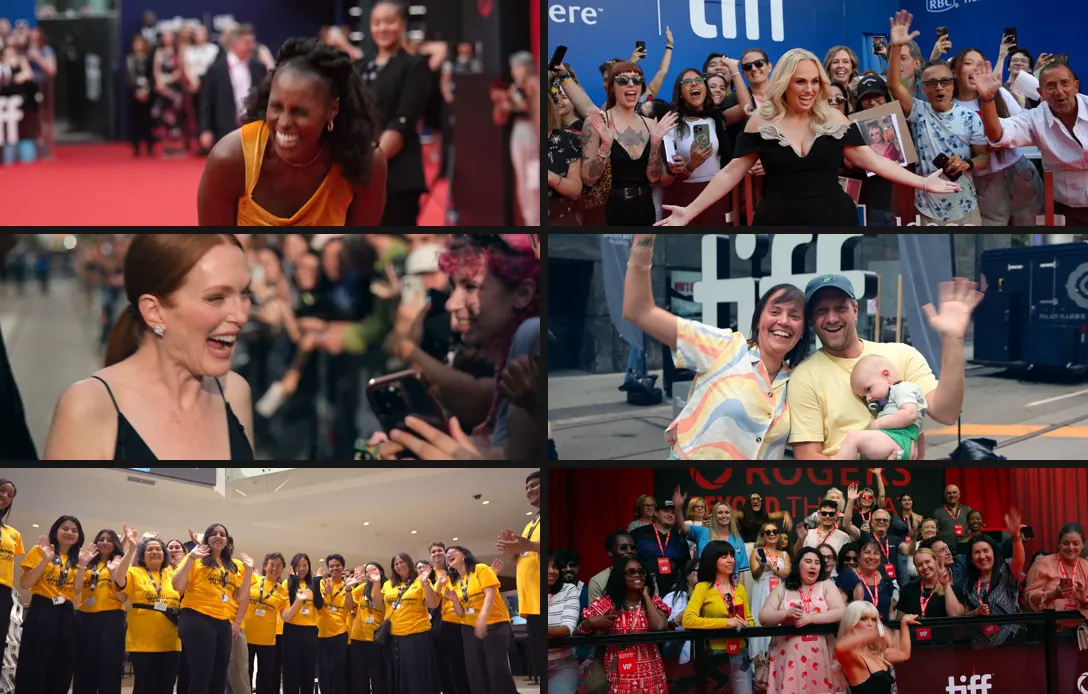
The closing trailer for TIFF 2026, cut from 130 hours across four camera formats. An always-on pipeline indexed every card, so the editor searched for a line instead of scrubbing for it.
- footage indexed
- 130 h
- soundbites scored and cut
- 1,834
The problem
TIFF shoots the festival the way a newsroom covers an election. Red carpets, press conferences, the market, the volunteers, the audiences, the street outside. For the 2026 closing trailer that came to 2,765 files across four camera formats, MXF from the broadcast bodies, MP4, MOV and a handful of BRAW, arriving over five days while the festival was still running. A hundred and thirty hours of it.
The trailer is two minutes and eight seconds long, and almost every shot in it is a person saying one sentence about what the festival meant to them. Those sentences are the whole edit, and they are scattered through the hundred and thirty hours with no way to know which card holds which line.
Watching it all once, at real time, is nineteen working days. The trailer was due in nine.
The pipeline
A poller sat next to the Premiere project and woke every three minutes for the length of the festival. It never touched the footage and never edited the timeline. It only read what was new and wrote its findings beside the project.
When a card landed, the pipeline inventoried it, pulled the audio and transcribed it, twice over: once as segments for reading, once word by word with timings so a cut could land on a syllable rather than a sentence.
Then it read the transcripts for lines worth using. Every candidate got a score, a length class, and a one-line note on why it might work, and was filed under the theme it belonged to: favourite place, red carpet, volunteers, midnight madness, audience, activations, and a wildcard bin for the rest. It found 1,834 of them, 371 long enough to carry a beat on their own and 1,463 short enough to cut between two other things.
Every bite was cut as its own sequence, padded at the head and tail, and pushed into a selects bin inside the editor’s own project. Searching for a line stopped meaning scrubbing. It meant opening a bin and reading.
The picture got the same treatment. Shots were detected and ranked on how well they were made and how the camera moved, so the editor could look at a bin of 952 candidates already sorted by whether a shot was a locked-off frame, a smooth move or a handheld push, and build pacing against real options rather than a memory of what was on card four. Faces were clustered per file so a person could be followed across the week, named only from what was said on mic and never matched against anything off the machine.
Nothing about the edit was automated. The pipeline never chose a line, never made a cut, never set a rhythm. It made the hundred and thirty hours answer a question.
The outcome
Seventeen hundred and fifty-nine bites and 657 shots were waiting in the project by the time the edit started in earnest, each one a real sequence at a real timecode with the line of dialogue attached. The editor’s week went to what the trailer should say and how it should move, which is the part of the job that needed him.
Same shape of problem on your side?